Some houses keep a few secrets. This one keeps an entire century.
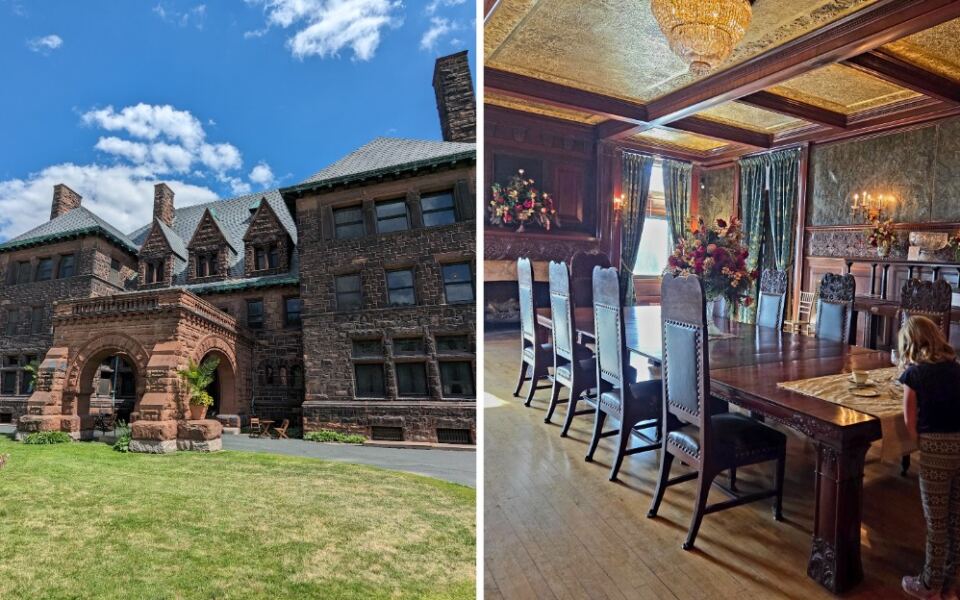
On a stately street in St. Paul, a massive red stone home has been holding on to the Gilded Age since 1891, and it still opens its doors to anyone curious enough to buy a ticket. Inside are carved woodwork panels, stained glass windows, an elevator, and systems for heat and electricity that were ahead of their time.
There are also back hallways where a hardworking staff once kept the whole place running. The man who built it helped stretch the railroads across the country, and his family story fills room after room.
Keep reading to learn how the tours work, which special tour opens hidden corners, when to go, and why so many people come back for a second look.
A Stone Giant on Summit Avenue
Every grand street needs a heavyweight, and Summit Avenue has one. The James J.
Hill House sits at 240 Summit Ave, St Paul, MN 55102, in the state of Minnesota, United States.
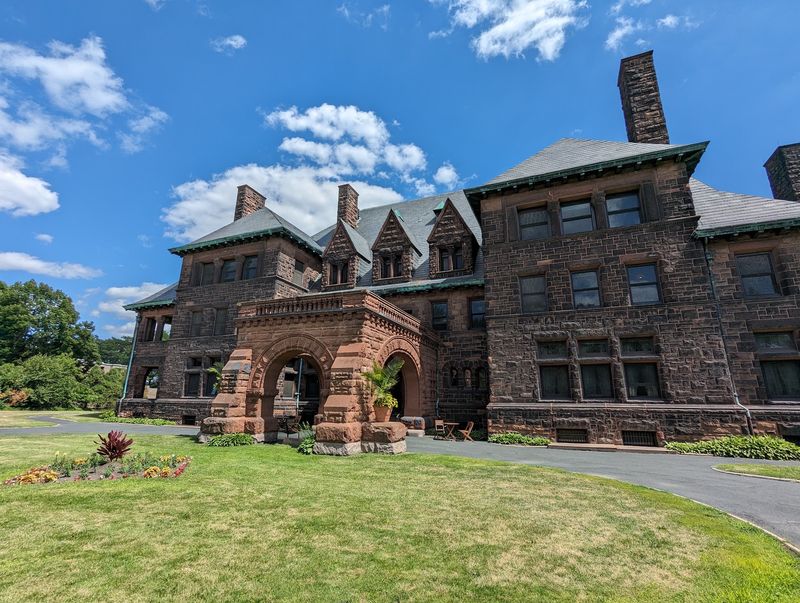
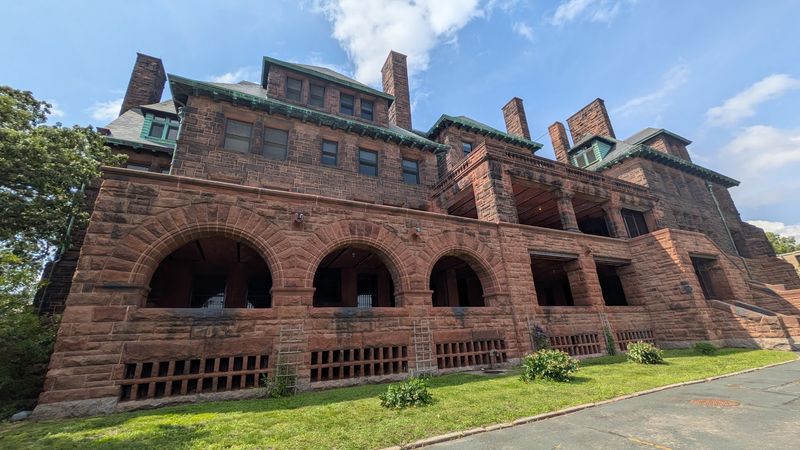
It is a rugged stone mansion completed in 1891 for a railway magnate. Today it operates as a history museum offering guided tours through the former family estate.
The house sits very close to the Minnesota State Capitol. It is also a near neighbor of the Cathedral of Saint Paul, which makes the area a natural stop for anyone exploring the city’s landmarks.
The scale is hard to overstate. The home covers roughly 36,000 square feet, which puts it firmly in the category of houses that need a map more than a doorbell.
From the street, the exterior can feel a bit imposing. That heavy stone face is part of the appeal, since it hints that whatever waits inside was built to last.
The address alone tells part of the story. Summit Avenue was where the wealthiest families in town chose to plant their roots, and this home was built to be the biggest statement on the block.
The Railroad Man Behind the Front Door
Few people get to say they changed the map. James J.
Hill came close, as the owner of the Great Northern Railway and a central figure in the expansion of the railroads.
His home works as a window into the country’s progress during the industrial era. Tours connect the house to that bigger story, so guests leave knowing more about Minnesota history than when they arrived.
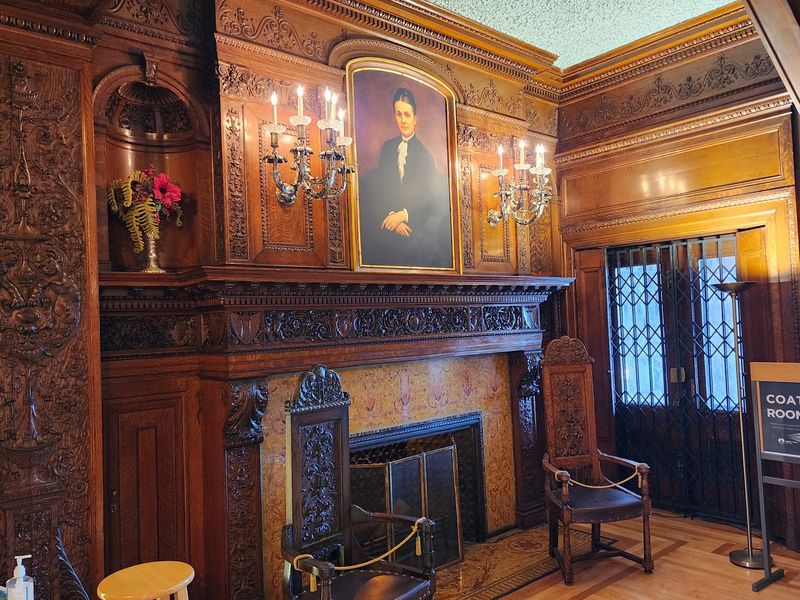
Hill did not live here alone. His wife, Mary, is a major part of the narrative, and the tours spend time on both of them as people, not just names on a plaque.
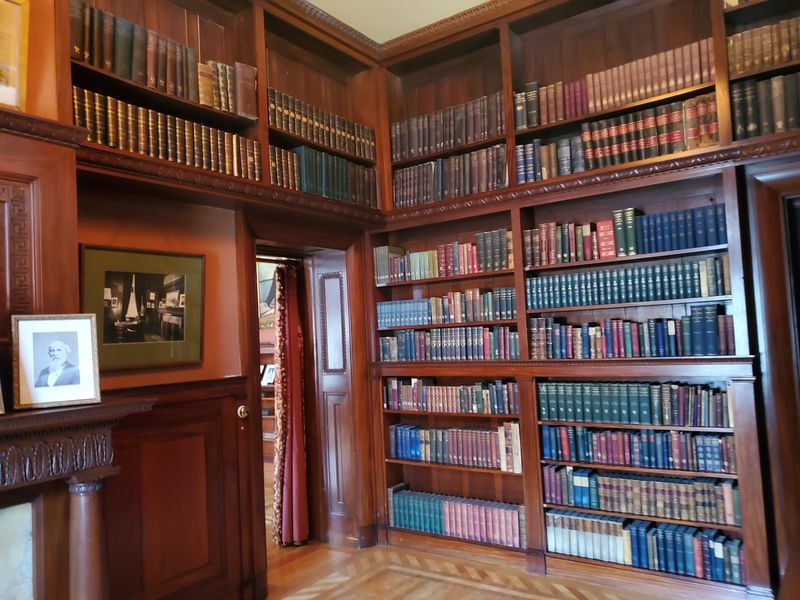
Family photos hang throughout the rooms. Little info placards on the walls add context, so the history keeps unfolding even between guide stops.
The result is surprisingly personal. Many guests walk out feeling as if they have spent an afternoon getting to know the Hill family.
For a railroad tycoon, that is quite a soft landing in the history books.
Woodwork That Steals the Show
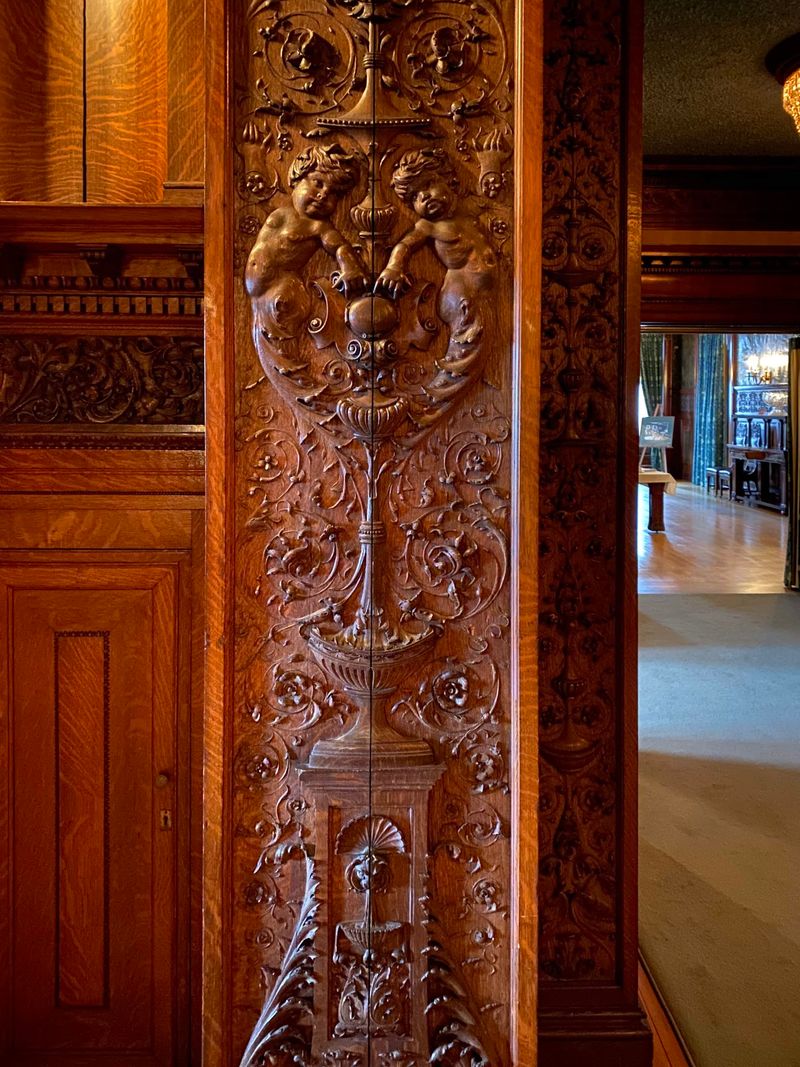
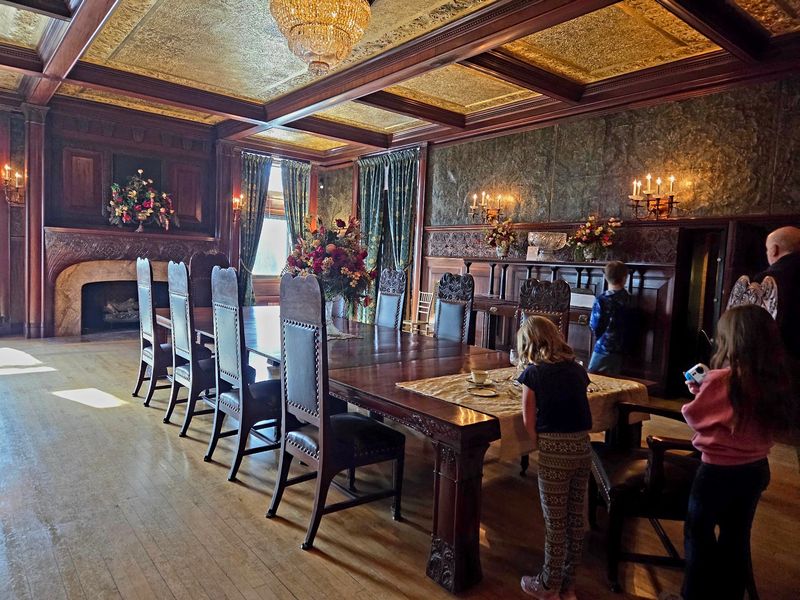
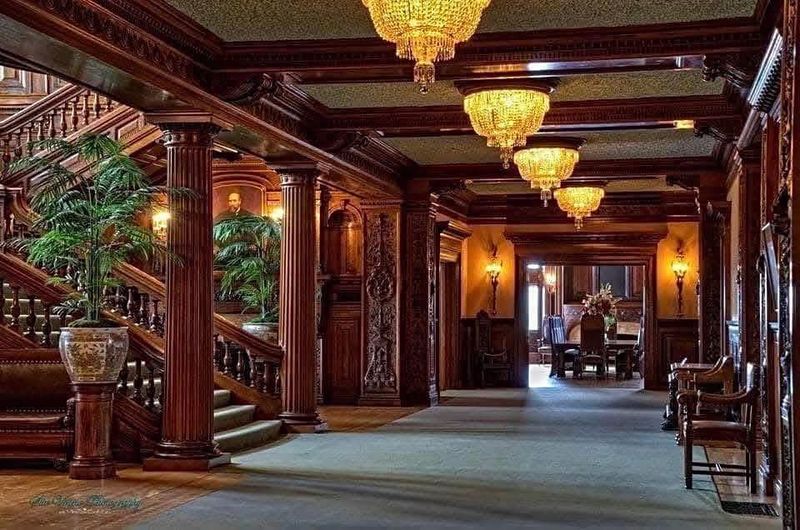
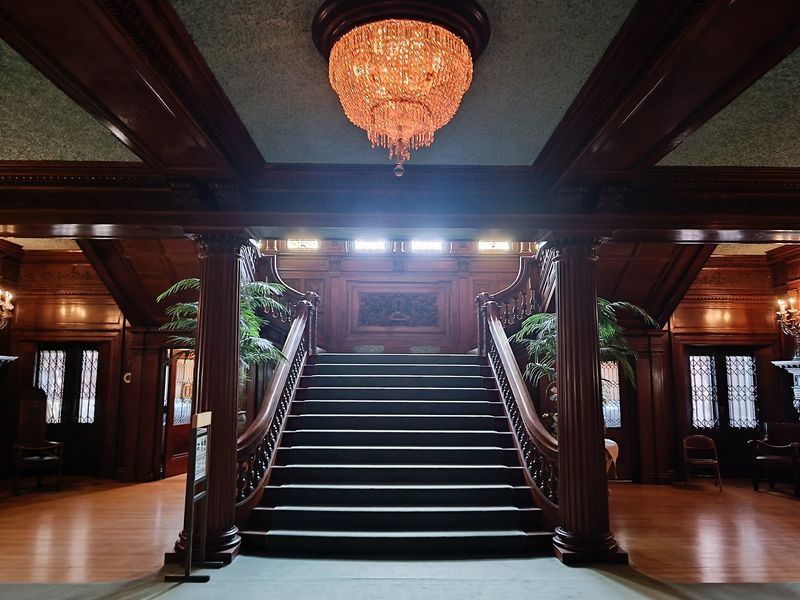
Carpenters of the 1890s clearly did not believe in plain surfaces. The woodwork here is one of the most talked-about features of the entire house.
Intricate hand carving appears in almost every room. Guides and regulars alike encourage guests to slow down and look closely, because the detail rewards a second glance.
The interiors do lean dark, thanks to all that rich wood. That shading is simply part of the period style, and it makes the craftsmanship stand out even more.
Gorgeous glass windows add another layer to the decor. Combined with the carvings, they show the level of extravagance a fortune could buy at the time.
Architecture fans tend to leave impressed. The building is a real showcase of craftsmanship, and the phrase about how they do not build them like they used to fits perfectly here.
Bring patience for the details. A quick walk-through would miss half the artistry carved into the walls.
High Tech, 1891 Edition
Smart homes are not a modern invention. When this mansion was finished, it was surprisingly forward-thinking for its time.
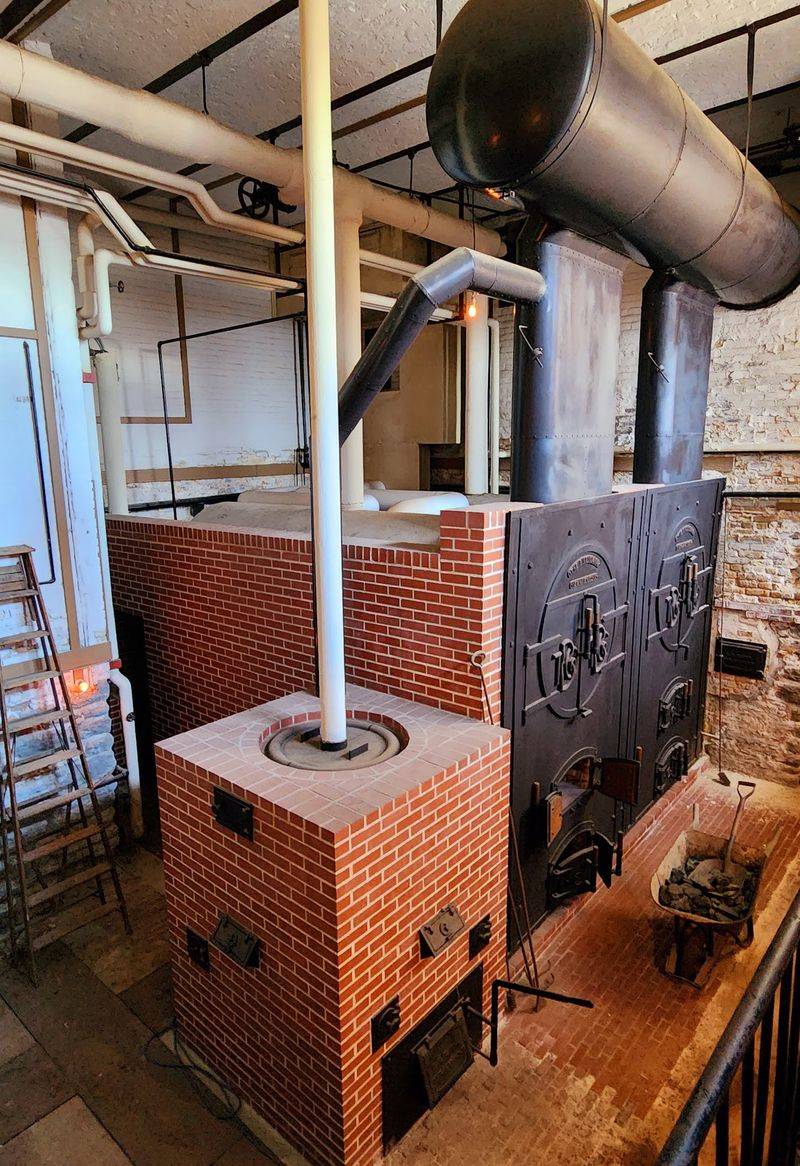
The house was fully electrified. It also had hot and cold running water, a serious luxury in the late 1800s.
Its heating and electrical systems are unusual enough that tours point them out as highlights. Seeing how the family lived with this technology gives the visit a fun science angle.
There is even an elevator today, which helps guests with limited mobility move between floors. Chairs are placed around the house for anyone who needs a quick rest.
One modern feature is missing, though. The building has no air conditioning, so summer days can make the rooms rather warm.
So the house was cutting edge in 1891, just not cutting edge enough to cool you off in July.
Life Below the Grand Staircase
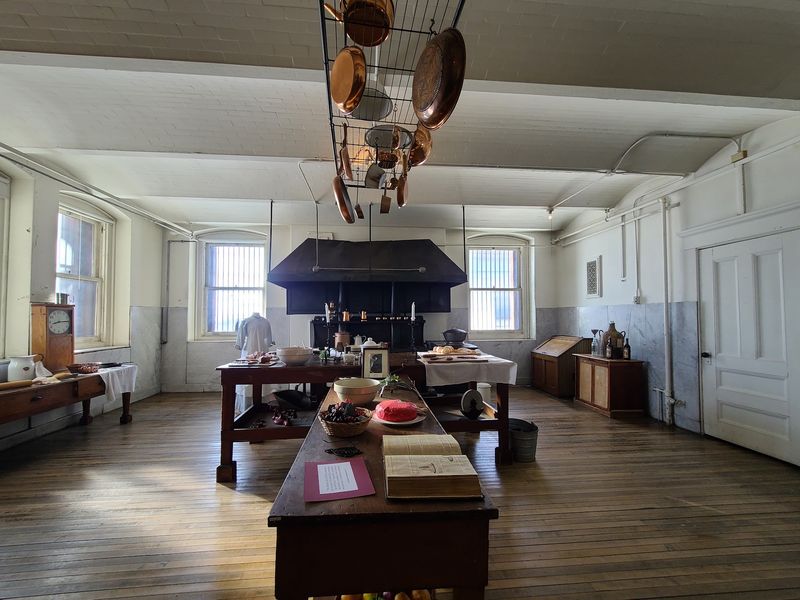
Behind every spotless parlor stood someone with a long to-do list. The tour does not skip over that side of the story.
Guides talk about the opulence the Hills enjoyed. They also explain the grueling behind-the-scenes work of the domestic staff who made it all possible.
The house is kept immaculate today. That condition makes it easier to understand how much effort it took to keep such a huge home running every single day.
Few historic houses manage this balance so well. Here, the people who scrubbed, cooked, and carried get real attention alongside the family.
The contrast adds depth to the tour. A home this size was less a residence and more a small operation with dozens of moving parts.
It is a reminder that a mansion never cleans itself, no matter how much money built it.
Guides Who Know Every Corner
A great house needs a great storyteller. The guides here are a major reason people leave smiling.
They are known for being friendly, knowledgeable, and eager to answer questions. Some will even say honestly when they are unsure of a detail, which builds real trust.
There are a lot of them, too. Guests wandering on their own are often invited to pause and listen in with a passing group.
Their passion shows. It is not unusual for someone lingering in a room to accidentally join another group, only to find that guide equally enthusiastic.
The front desk staff earns praise as well. Check-in tends to be smooth, and the welcome sets a pleasant tone for the hour ahead.
Plenty of museums have good exhibits. This one has people who make the walls talk.
How the Standard Tour Works
Sixty minutes goes fast in a 36,000-square-foot house. The standard guided tour runs about an hour and keeps a brisk pace.
Some spots can feel a bit rushed. The trade-off is that guests can revisit most of the house afterward to study the photos, artifacts, and displays more closely.
Photos are welcome during that time. Many people use it to catch the details they spotted mid-tour.
Self-guided visits are also available. Even so, the guided route offers access to a few things that are not normally open.
Expect some roped-off areas. Parts of the house are closed or used for storage, and much of it is unfurnished since family members took furniture over the years, though some pieces have returned.
Plan for plenty of steps. A house this big turns a history lesson into a light workout.
The Nooks and Crannies Secret
Curious about the doors the regular tour walks past? That is exactly what the Nooks and Crannies tour is for.
Some areas are blocked off from the standard route and reserved for this special experience. It can feel confusing at first, until you realize it is an entirely separate adventure.
This is not just the normal tour with a few extras. Guests see many more unusual areas of the house that stay hidden otherwise.
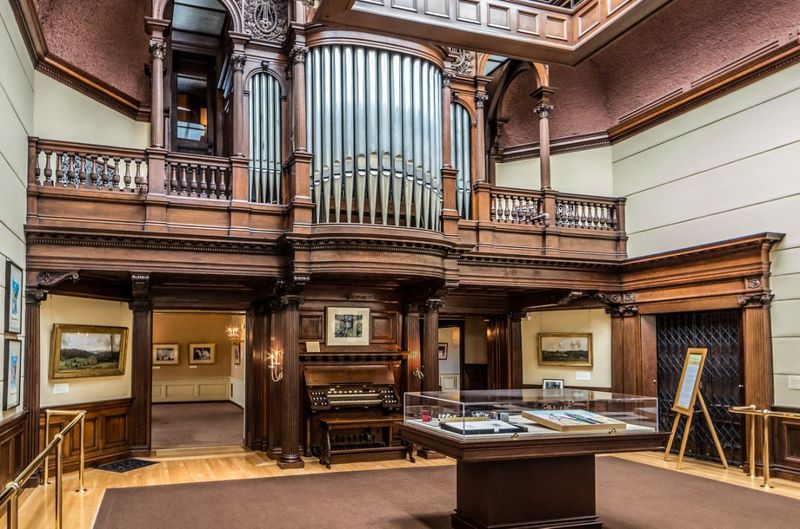
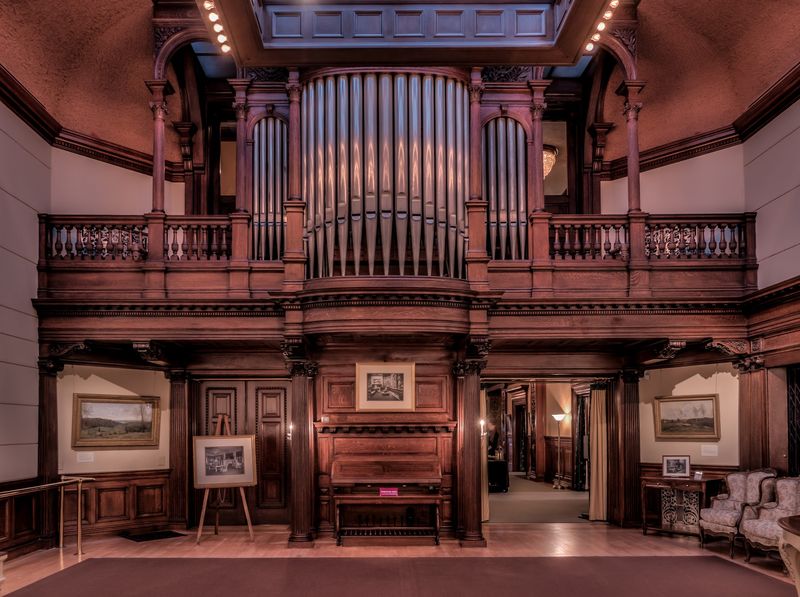
The organ is a highlight. During this tour, staff play one of the oldest working organs, a treat that adds a memorable moment.
A smart order works best. Start with the standard or self-guided visit, then come back for the deeper dive into the corners.
Consider it the sequel that might be better than the original.
Christmas Dressed in Gilded Age Style
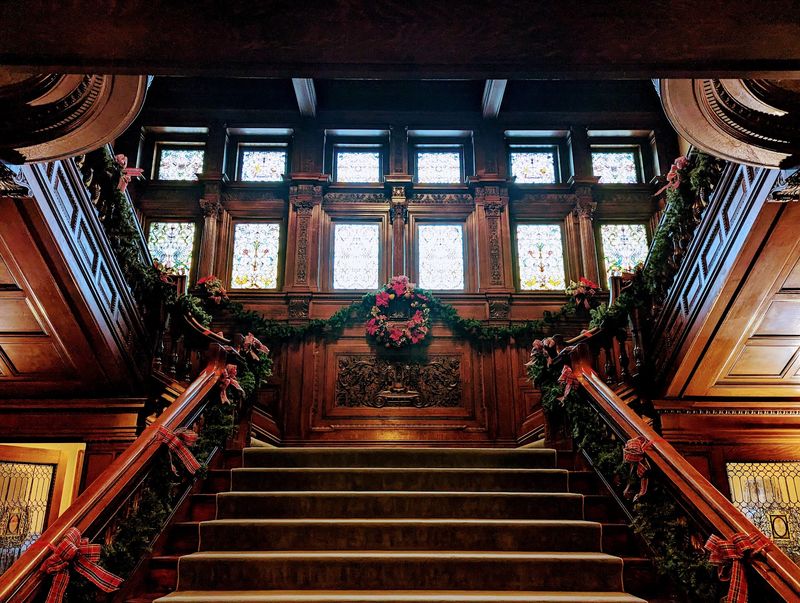
December brings a different personality to Summit Avenue. Christmas decorations are among the most mentioned parts of this house.
A winter tour runs during the holiday season. It gives the rooms a festive spin while keeping history at the center.
The winter version is a bit different from the regular summer tour. The summer route is known to be a little more extensive.
That difference gives people a reason to return. Many come once in winter, then again in warmer months to see more of the house.
Holiday decor and carved wood make a fitting pair. The season suits a home built for grand gatherings.
Two seasons, two tours, one house that refuses to be seen only once.
Small Historians Welcome
Kids and museums do not always mix. This house has figured out a clever fix.
The front desk hands young guests a scavenger hunt. It keeps them busy and excited to move from room to room.
Guides make an effort to include children too. Some invite kids to ask questions and even give them small jobs to keep busy hands occupied.
The approach turns history into something hands-on. Children as young as seven have walked out asking when they can come back.
Parents appreciate that the visit holds attention for a full hour. That is no small victory in a house full of things not to touch.
Turns out a railroad baron’s mansion makes a pretty good classroom.
Who Will Love It Most
History buffs are the obvious match. Still, the audience runs wider than that.
Architects and design lovers find plenty to study, from carvings to window glass. People who have toured other Gilded Age homes, including Minnesota’s Glensheen, often rank this one among their favorites.
Families do well here thanks to the kid-friendly touches. Travelers from out of state, even as far as Washington, make return trips.
A few notes help set expectations. Some areas are closed, many rooms are empty, and a bedroom or two that people hope to see stays off the route.
Overall, the place earns a 4.7-star average from more than 1,400 opinions online. That is a strong showing for a house tour.
Bring curiosity and comfortable shoes, and you will fit right in.
Hours, Tickets, and Parking Smarts
Timing matters here. The house is open Thursday through Sunday from 10 am to 5 pm and closed Monday through Wednesday.
Tickets can be bought in advance online or on-site. Booking ahead is wise, since walk-ins may wait a while for an opening with a guide.
The last tour on Saturday has started around 3:30 pm. Arriving earlier gives you more time to explore before or after.
The visit is considered reasonably priced. Check the Minnesota Historical Society website for current rates before you go.
Parking is mostly on the street and is usually easy to find. Events at the nearby cathedral can fill spaces, so be ready to walk a bit.
Plan for summer warmth, since there is no air conditioning inside.
Worth the Climb Through Time
Some museums tell you about the past. This one lets you walk its halls.
The James J. Hill House mixes a railroad legend, a family story, stunning craftsmanship, and surprising technology into one long, step-filled hour.
Add the hidden corners tour and the holiday season, and there are plenty of reasons to return.
It is not perfect. Empty rooms and closed areas leave some wishing for more.
Still, the guides, the woodwork, and the honest look at the staff who kept it running make it a standout stop in St. Paul. It sits close to other landmarks too, so it fits easily into a day of exploring.
Preservation feels like the real message here. Places like this help future generations understand how the country grew.
Go once, and you may find the doors of 1891 calling you back.
Share this story