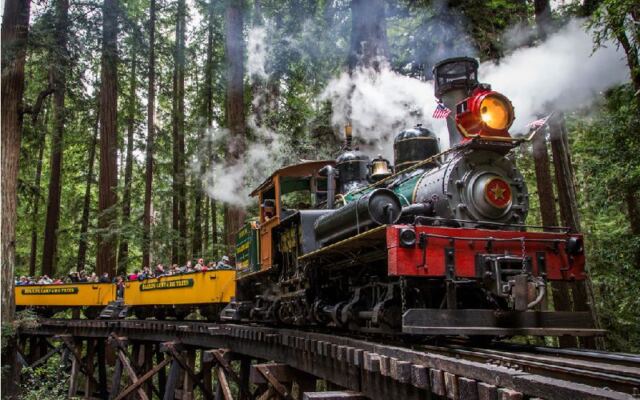
Somewhere in the Santa Cruz Mountains, a little steam engine spends its days hauling open cars up a mountainside, zigzagging back and forth like it forgot where it parked. Below it sits a tiny western-style town with a blacksmith, a general store, and a train depot that looks borrowed from an old movie set.
Families, train fans, and couples out for a slow afternoon all end up here for the same reason: a ride through towering redwoods that no car trip can match. The day does not stop when the whistle does, either.
There are forest trails, a neighboring state park, glowing night walks, and food to wrap things up western style. Keep reading for the full route, the smartest seat on the train, and the timing tricks that make the trip a winner.
A Frontier Town on Graham Hill Road
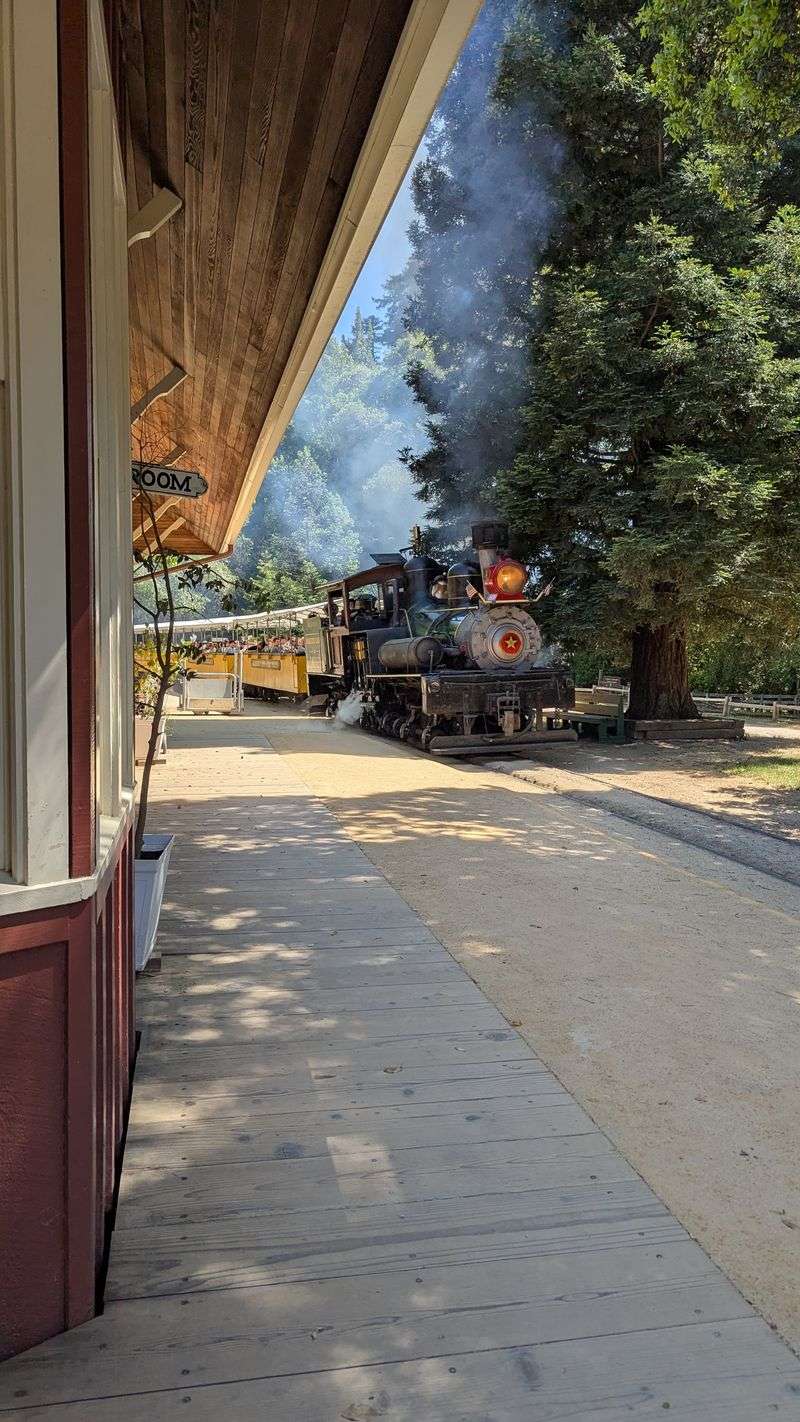
Tucked into the hills above Santa Cruz, Roaring Camp sits at 5401 Graham Hill Rd, Felton, CA 95018, in the United States. It is a family-friendly attraction built around train rides, seasonal routes, and all-ages special events.
The first thing that stands out is the setting. The grounds are laid out like a small western town, complete with a depot, a souvenir shop, and a working blacksmith.
Guests check in or buy tickets at the train window, then wait for the steam engine to roll up to the platform. It feels less like a theme park and more like a frontier stop that happens to have a schedule.
The camp keeps steady hours, opening at 9 am and closing at 5 pm every day of the week. That consistency makes it easy to plan around, since there is no guessing about odd weekday closures.
Felton itself is a short drive from the coast, which puts the camp within easy reach of a Santa Cruz beach day. Many travelers pair the two, and the camp even runs a beach train that links the mountains with the Santa Cruz Boardwalk area.
The address is the easy part. Deciding which train to catch takes a little more thought.
Redwoods With a Rescue Story
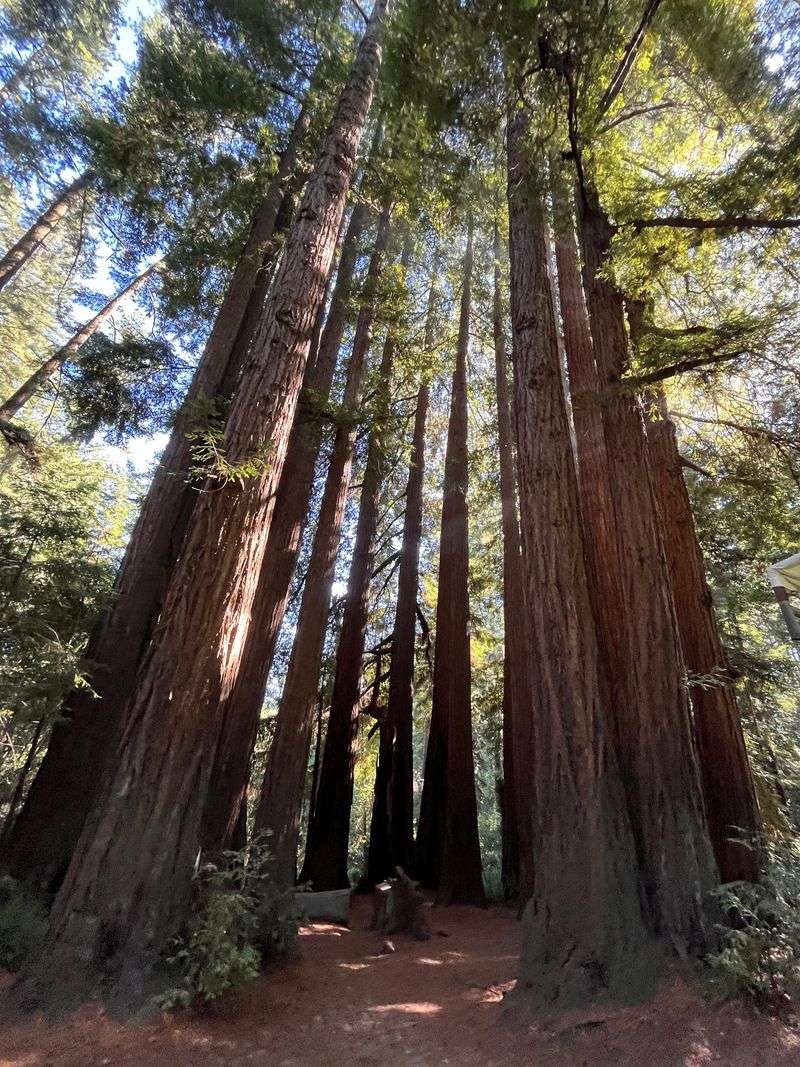
Some trees here were already old when California became a state. The forest surrounding the camp holds ancient redwoods that are hundreds of years old, and their survival is part of the story the crew loves to tell.
The history of how these trees were saved is a recurring highlight of the ride. Conductors share background on the Santa Cruz Mountains, the trains, and the forest along the way.
The camp sits right beside Henry Cowell State Park, which protects a large stand of these giants. That neighbor relationship gives the whole experience a sense of place that goes beyond the tracks.
Learning happens without a classroom feel. The guides mix facts with humor, so the lessons tend to stick around longer than the ride does.
Families often leave with a better grasp of why these forests matter. Kids come away knowing a few local facts they can repeat at dinner, which counts as a small win for any parent.
The redwoods are the reason most people come. The train is simply the most charming way to meet them.
The Little Engine That Climbs Bear Mountain
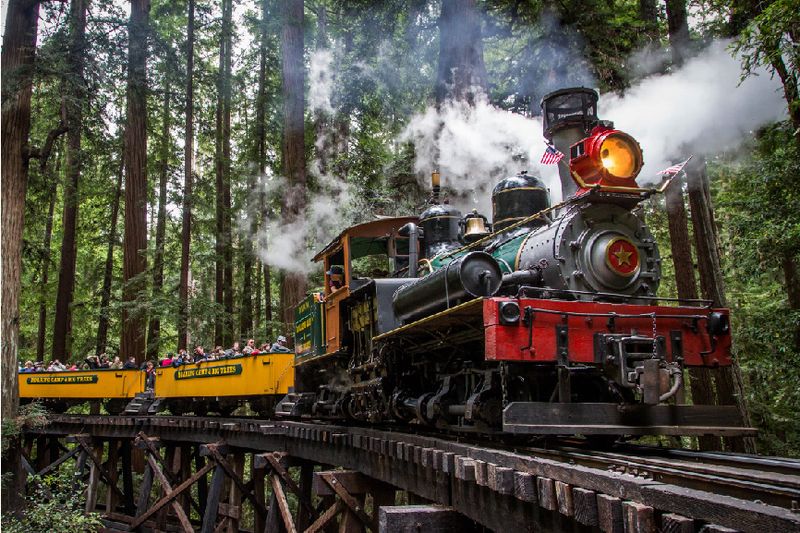
Small but stubborn, the steam engine at the front of the Redwood Forest Steam Train is a true workhorse. It pulls its cars all the way to the top of Bear Mountain.
The climb is part of the fun. The route works its way up the mountainside with a back-and-forth pattern, which keeps the ride interesting as the train changes direction on the grade.
Train fans appreciate that this is a fully restored piece of history rather than a modern replica. The vintage cars carry plenty of authentic character, and the whole outfit feels like a trip back in time.
The full journey takes about an hour and a half from departure to return. That is long enough to settle in, listen to the conductor, and watch the forest change as the elevation rises.
Views open up as the train gains height, with mountain scenery appearing between the trunks. There always seems to be something new to look at, whether up in the canopy or down along the slopes.
For anyone traveling with a train lover, this ride tends to move straight onto the must-see list. Non-fans usually come around by the second switchback.
Conductors Who Double as Storytellers
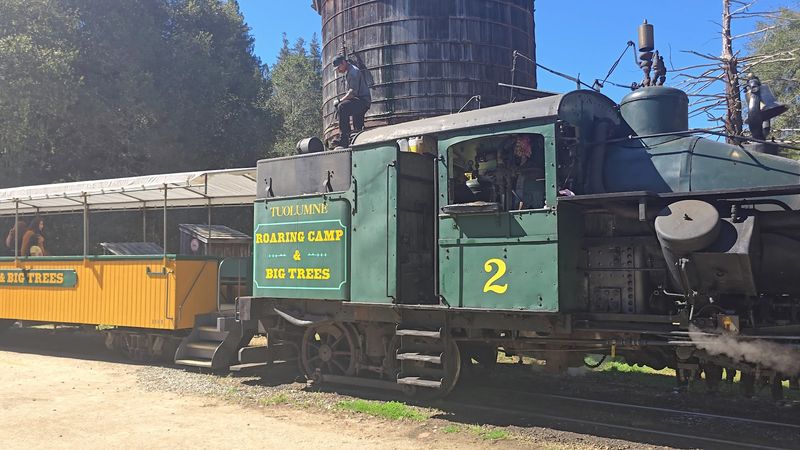
Ask most passengers what made their ride memorable, and the answer often points to the person holding the microphone. Conductors here have a reputation for being funny, factual, and full of stories.
Along the route, they share history about the trains, the forest, and the mountains. The delivery tends to land somewhere between a tour guide and a stand-up act, which keeps both adults and kids paying attention.
One small catch is worth knowing. Passengers sitting in the car closest to the engine sometimes have trouble hearing the narration over the train itself.
Choosing a car a bit farther back can help with that. It is a simple move that gives a better shot at catching every joke and fact.
The staff around the depot carry the same friendly energy. Volunteers and crew members are known for being welcoming and accommodating, which makes the check-in and boarding feel more personal.
A good ride is about more than scenery. With the right guide on board, the trip becomes a lesson that nobody realizes they are taking.
Open Cars or Covered Ones
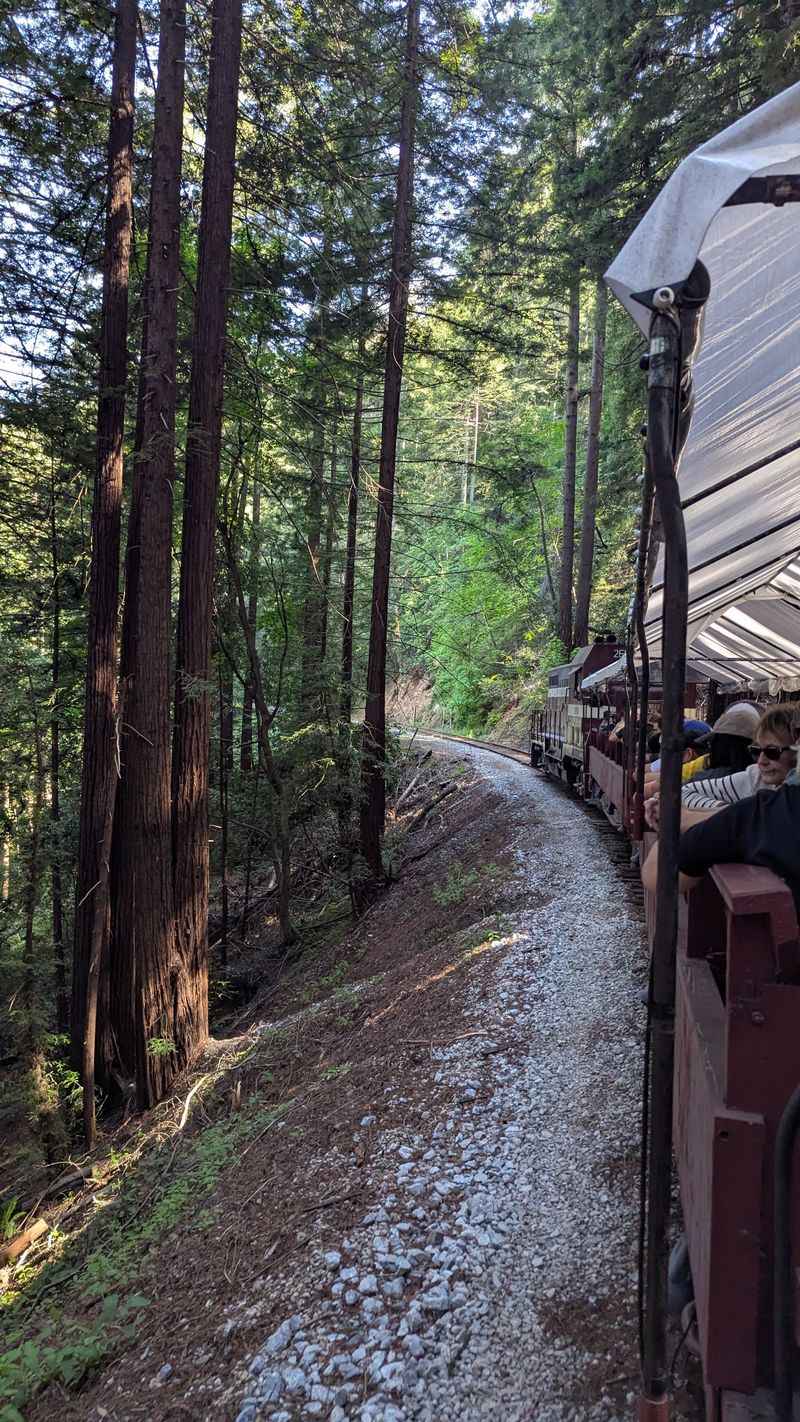
Seat choice can make or break the view, and the smart money goes on the open-air cars. The train runs a mix of uncovered cars and others topped with a large white canopy, plus a wooden car with a different layout.
Uncovered cars let riders look straight up at the redwoods with nothing in the way. The canopy of the forest provides shade for most of the trip, so the sun is rarely a problem.
The exceptions come at the start, the midway break, and the end of the ride. A hat and sunglasses handle those stretches nicely.
Seating is first come, first served, and the open cars fill quickly. There are usually only two fully uncovered cars, so arriving at the platform early pays off.
The benches run along the sides of each car, facing inward toward the passengers across the aisle. That means turning a bit to look outside, which is easier in the open cars where the whole sky is fair game.
In covered cars, the view narrows to a gap above the people across from you. For a ride built around tall trees, looking up really matters.
The Midway Stop Among Giants
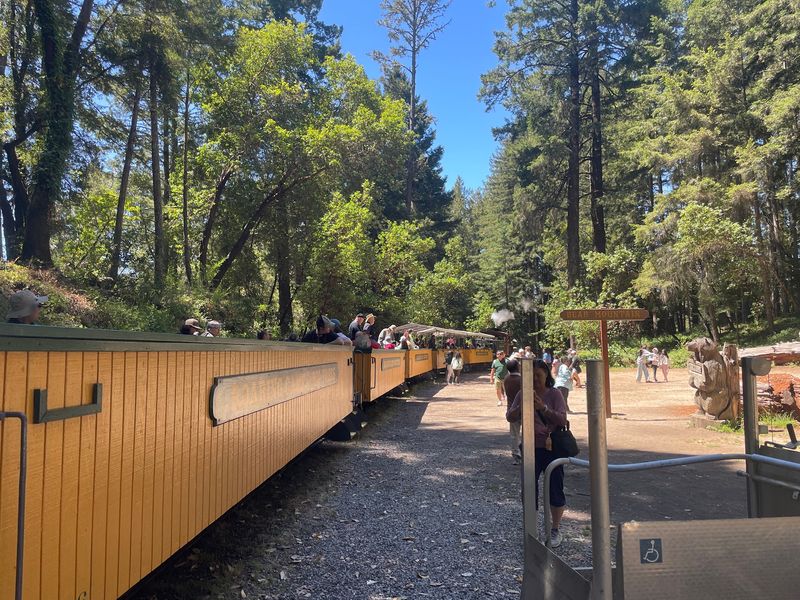
Halfway up the mountain, the train does something most rides never do. It stops and lets everyone off.
The break gives passengers a chance to stretch, use the restroom, and take photos among the trees. For many, this pause becomes the favorite part of the whole trip.
Getting off the train changes the perspective. From the ground, the size of the redwoods becomes much easier to appreciate than from a moving bench.
It is also a natural photo moment for families and couples. Group shots with a giant trunk in the background are practically a tradition here.
The stop is fairly short, so it pays to be ready with a camera or phone. Plan a quick restroom visit first, then spend the remaining minutes soaking up the scale of the forest.
Kids who have been sitting still for a while usually welcome the chance to move around. Parents tend to welcome it too, for slightly different reasons.
Once everyone climbs back aboard, the train continues on its route. The second half often feels different after spending a few minutes standing among the trees on foot.
Blacksmiths, Looms, and a General Store
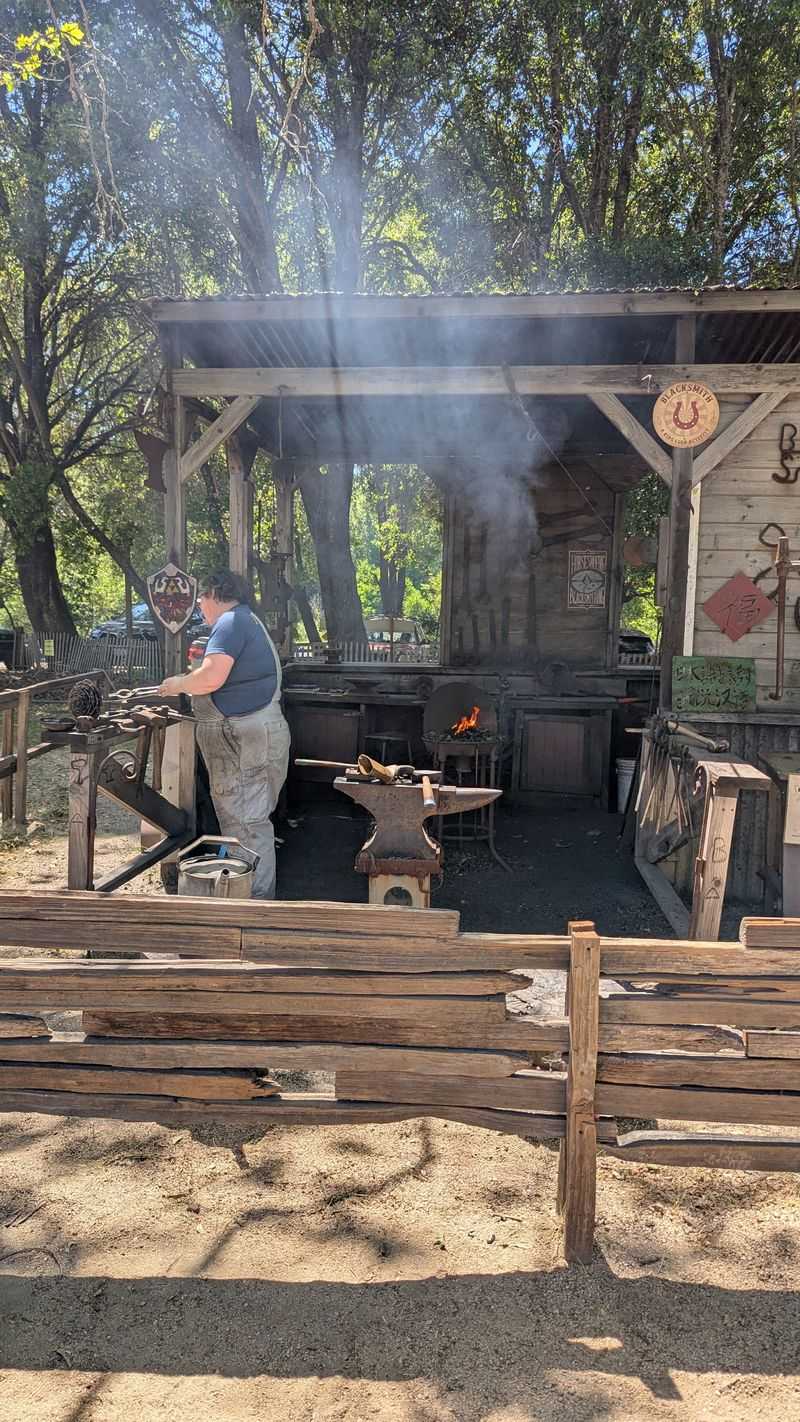
Before or after the ride, the little town around the depot rewards a slow wander. A working blacksmith is one of its biggest draws.
The blacksmith is known for being informative and happy to chat about the craft. The same artisan also made the handcrafted lantern sculptures used on the camp’s night trail.
Nearby, a fiber artist works a loom to make yarn and talks with curious guests about the process. These demonstrations add a hands-on feel to the old-time setting.
The well-stocked General Store is another stop worth making. It carries cold drinks, souvenirs, and a surprising number of stuffed banana slug toys.
There is also a small museum, picnic areas, restrooms, and a souvenir shop. Together, they turn the depot into more than a waiting area.
Educators on site are especially good with children. They teach fun facts about the critters living in the area, which turns a simple walk into a mini nature lesson.
Spending an extra hour in the village is never wasted time. Plenty of people leave wishing they had stayed longer at camp.
Banana Slugs and Forest Trails
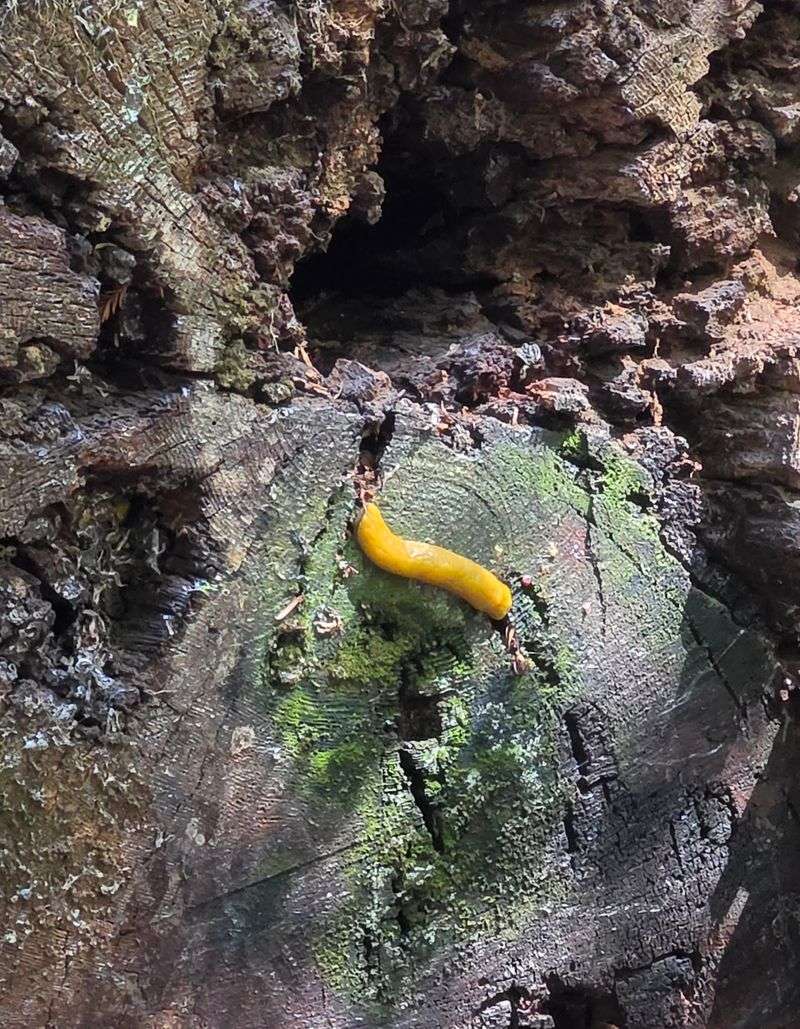
Bright yellow and completely unbothered, the banana slug is the unofficial mascot of these woods. After a rain, sightings along the paths become common.
That explains all the stuffed slug toys in the shops. Once you spot a real one on the trail, the souvenirs suddenly make perfect sense.
A 0.8-mile walking trail winds through the redwoods near the camp. Benches are placed along the way, making it easy to stop and rest.
The gravel surface is fairly even, so wagons and strollers handle it well. It is a short, approachable walk that suits a wide range of ages and energy levels.
Many people describe the train ride itself as a hike without the walking. The trail fills in the gap for anyone who wants a bit of both.
For bigger adventures, Henry Cowell State Park sits right across the tracks. Guests can walk over and explore its trails, including a path through a grove of impressive trees.
Arriving early leaves time for a stroll before departure. A short loop pairs nicely with the ride, and it gives restless kids a chance to burn off some energy first.
Sequoias at Night
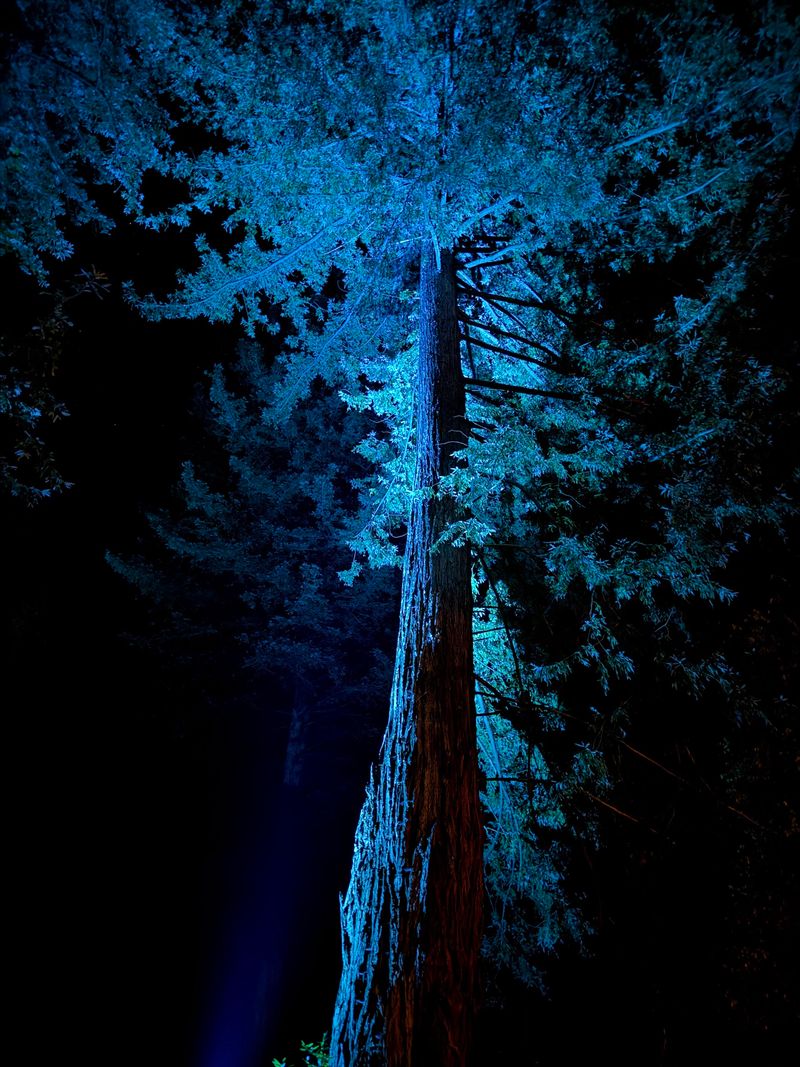
After dark, the forest gets a whole new look. Sequoias at Night is a newer evening experience that lights up the redwoods in blues, greens, purples, and pinks.
Handcrafted lantern sculptures line the trail. The camp’s own blacksmith made them, which gives the walk a personal, local touch.
Along the path, guests can stop to play a few old-fashioned games. The pace stays relaxed, and the mood tends to be cheerful and unhurried.
There is also an evening train that runs through the forest. It currently operates on Fridays and Saturdays, making it a handy weekend plan.
Evening train tickets were recently $26.50, which many consider solid value. Food and drinks are available for purchase, and the General Store stays well stocked.
Temperatures drop after sunset, so a light jacket is a smart addition. Later in the year, evenings can get noticeably chilly.
Families, couples, and groups of friends all seem to find something to enjoy here. It is a calm, unusual way to spend a summer night, and a fresh reason to return even after riding the daytime train.
Rounding Out the Day Western Style
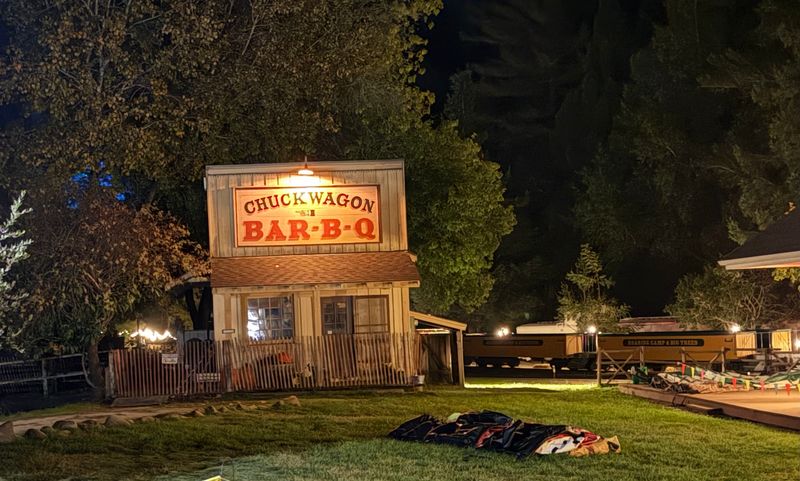
Every good train day deserves a proper finish, and the camp’s frontier setting makes a cowboy-style wrap-up feel right at home. The western town backdrop does most of the work.
Food choices are available on site, along with picnic areas spread around the grounds. Groups can grab a meal, settle at a table, and relax after the ride.
Options are somewhat limited inside the camp, so planning ahead helps. Some families bring their own picnic to enjoy at the tables.
Cold drinks are easy to find at the General Store. That makes a quick refuel simple before heading out to the trails or the next departure.
Special events add variety throughout the year. The camp hosts all-ages events and seasonal programs, so the lineup can change depending on when you visit.
Checking the official website before the trip is the best way to see what is running. Event days can bring bigger crowds, so knowing the schedule helps with timing.
The setting has even earned a following as a wedding venue. When a place works for both kids and couples saying their vows, it clearly knows how to host.
Who Rides and When to Go
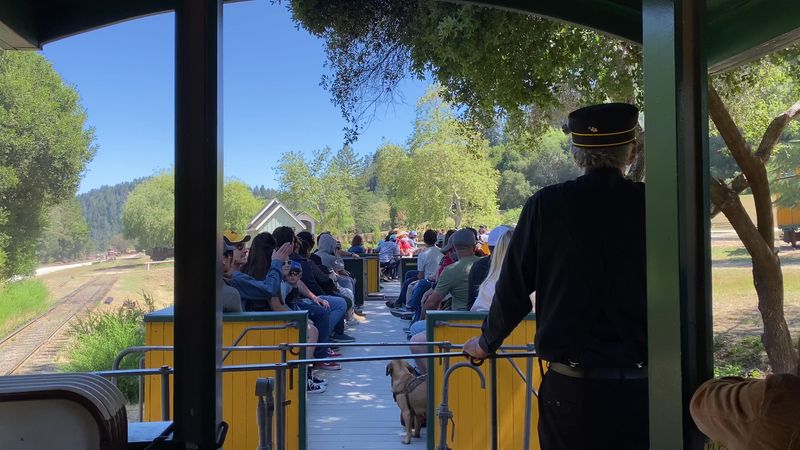
Single travelers, couples, grandparents, and families of every size all share these benches. The ride appeals to a wide crowd, and kids in particular tend to have a great time.
Dogs are welcome too, as long as they stay on a leash and behave. Better yet, they ride free.
Accessibility is a strong point. The train has a lift that rolls up for wheelchairs, and while some paths are dirt, most wheelchairs manage them without trouble.
Timing matters more than many expect. During the rainy season, the cars are often kept covered even on dry days, which can block a large share of the forest views.
The best window for open cars typically runs from mid-May through September. Late August still brings pleasant weather, while later months can turn cooler.
Crowds vary as well. Quieter days allow easy conversation, while event days such as the Thomas the Train weekends can pack the cars with excited young fans.
Those wanting a calmer ride may want to avoid big event dates. Fans of lively energy, on the other hand, will feel right at home.
Tickets, Parking, and Smart Planning
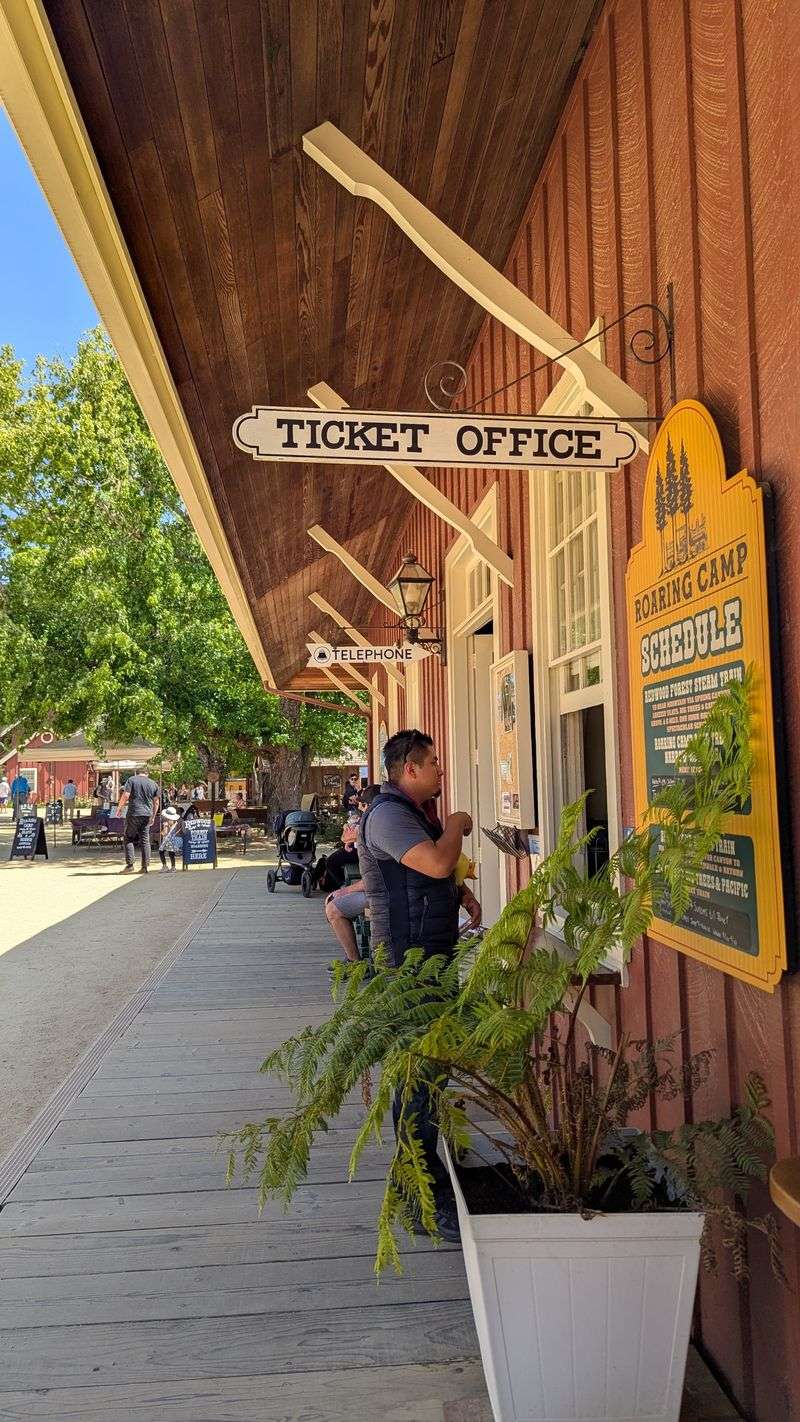
A little homework goes a long way here. Buying tickets in advance is the best way to lock in a preferred departure, since later rides can sell out.
For reference, one recent visit cost $88.93 for two adults on the Redwood Forest Steam Train. The dog came along at no charge.
Online purchases still need a stop at the ticket booth. Guests pick up their receipts there, and the conductor checks them before the ride, so budget extra time for that line.
Departure times listed online may not tell the full story. Additional trains sometimes run after the last listed time, and anyone who does not fit on one train can usually wait for the next.
Boarding is not organized by a formal line. Arriving at the platform early is the easiest way to grab a spot in an open car and keep your group together.
Parking is plentiful and convenient, though a fee applies for daytime visits. One more tip: phone service is spotty, so download directions before leaving to avoid a confused moment at the exit.
Plan well, and the rest of the day runs on schedule.
Worth the Whistle Stop
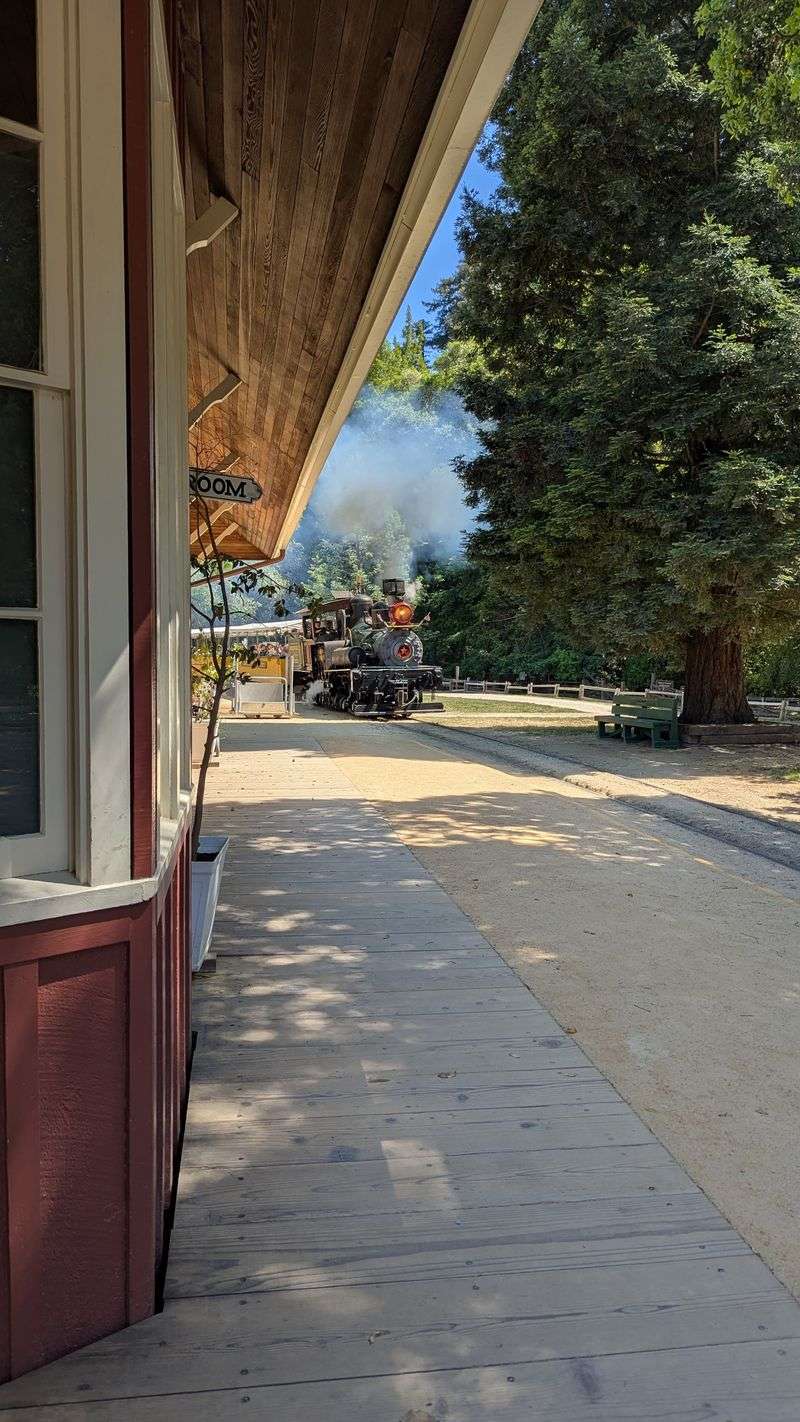
Few outings manage to blend history, nature, and a bit of frontier fun as neatly as this one. A ride up Bear Mountain behind a restored steam engine sets the tone, and the rest of the day builds from there.
The camp is not without small bumps. Inward-facing seats, a busy boarding process, and covered cars in wet months can take some shine off the experience.
Most of those issues shrink with a bit of planning. Choose an open car, arrive early, buy tickets ahead, and aim for the drier months.
Add the blacksmith, the General Store, the slug-spotting trails, and the neighboring state park, and a quick ride easily stretches into a full day. Evening walks under glowing redwoods give even return guests something new.
The ride itself fits into about two hours, but the memories tend to last much longer. Kids talk about the slugs, train fans talk about the engine, and everyone talks about the trees.
For anyone exploring the Santa Cruz area, this mountain railroad deserves a spot on the itinerary. Grab a ticket, claim an open seat, and let the little engine handle the climb.
Share this story